The Different Kinds of Stress and How to Tell Them Apart
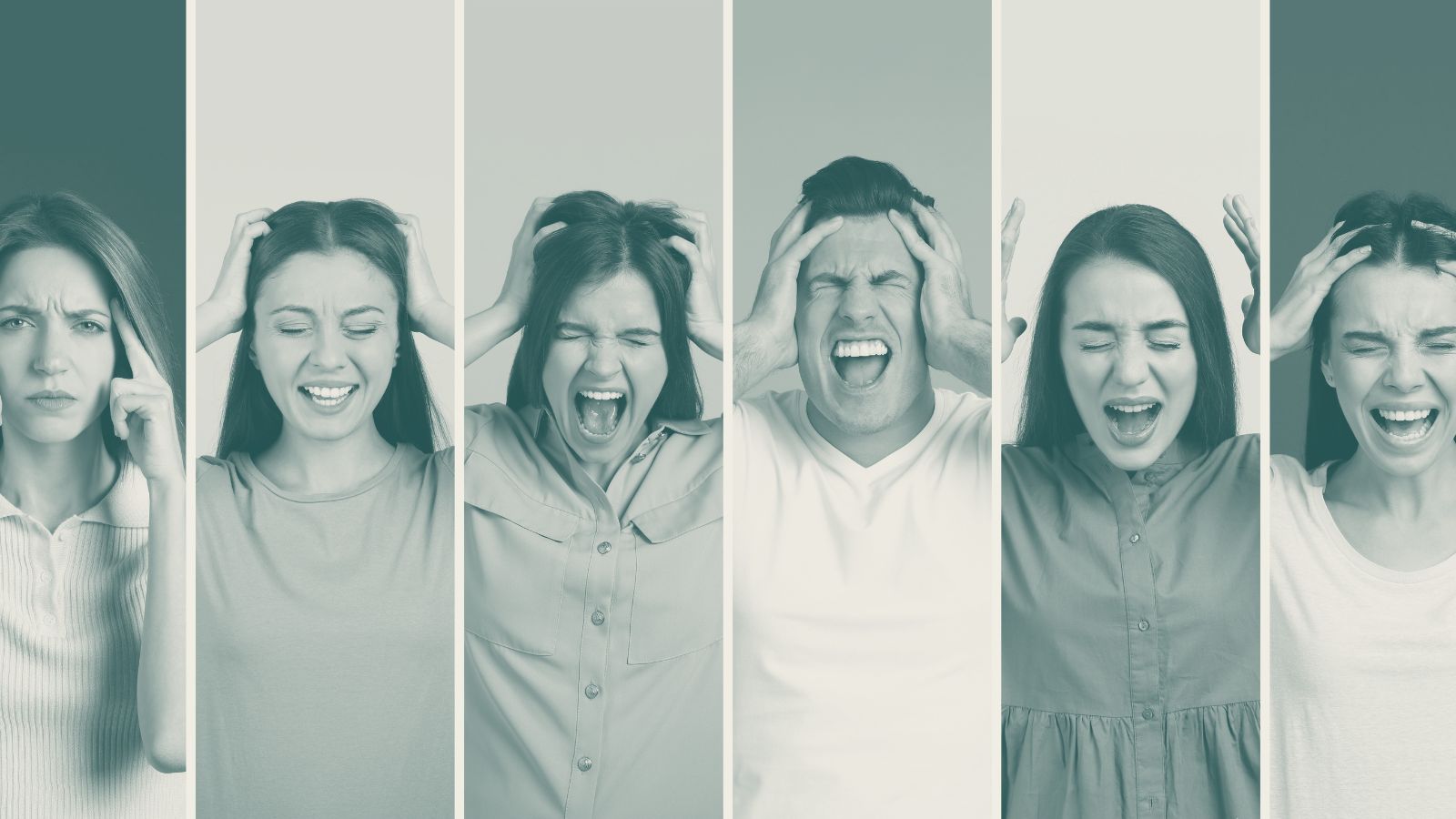
Most people use the word “stress” to cover everything. A rough Monday morning, two nights of bad sleep, money worries, a job that’s been quietly grinding on for two years, a fight with a friend. All of it gets the same label. That’s useful shorthand for conversation, but it makes stress harder to actually handle, because the things that help one kind don’t really do much for the others.
There are a few real kinds of stress, and they don’t all respond to the same fixes. Knowing which one you’re in at any given moment is the first useful step. Here’s a short, practical breakdown.
The three kinds worth telling apart
Stress gets sorted into more categories than most people realize. The NIH hosted physiology reference Physiology, Stress Reaction lists seven, including traumatic, environmental, and physiological stress. Three of them cover most of ordinary life, and those three are the ones worth being able to name.
Acute stress
Acute stress is the short, sharp kind. Think of the traffic jam that almost made you late, the argument that came out of nowhere, the near-fall on the stairs.
Two systems fire, at two speeds. Your sympathetic nervous system reacts within seconds, releasing adrenaline and noradrenaline, which is the racing heart and the tight shoulders. Cortisol arrives on a slower track, through a chain running from your brain to your adrenal glands. Both are described in that same reference, and the distinction matters: the jolt you feel immediately and the hormone everyone talks about are not the same event.
This is the kind of stress most people mean when they say “I was so stressed today.” It’s the most common, the most situational, and the easiest to recover from. NIMH puts it simply in its stress and anxiety fact sheet: stress is generally a response to an external cause, and it goes away once the situation is resolved. The trouble starts when it doesn’t.
Episodic acute stress
Episodic acute stress is what you get when acute stress arrives often enough to stop being an event and start being a pattern. An overbooked schedule that never resets, a job where small fires break out four times a day, a relationship where you’re always bracing for the next disagreement.
The physical response is the same as ordinary acute stress. The difference is frequency: your body never gets the gap it needs before the next spike. The reference describes this as repeated episodes that wear on health and daily functioning, and it’s the category that produces the feeling of being permanently a little wound up, even on a weekend when nothing is technically happening.
Chronic stress
Chronic stress is the long, low-grade kind. The two-year job you’ve been meaning to leave, financial pressure that hasn’t let up, a caregiving role with no clear end. The APA describes it as stress that is constant and persists over an extended period, and links it to anxiety, insomnia, muscle pain, high blood pressure, and a weakened immune system, along with contributing to heart disease and depression.
What makes it hard to catch is that it usually doesn’t feel like “stress” in the dramatic sense. It feels like a muted version of yourself: low energy, sleep that doesn’t rest you, a vague background dread. Under chronic stress the sympathetic nervous system and the cortisol pathway stay switched on rather than spiking and settling, so the body never fully returns to baseline. It’s also the hardest to spot from the inside, because it slowly becomes the new normal.

Good stress vs bad stress
Not all stress is harmful. The term for the useful kind is eustress (yoo-stress), and it’s the same machinery producing a better outcome. The physiology reference describes positive stressors as ones that restore energy and sharpen how well you think, with distress as the opposite: the same activation producing wear. The APA makes a similar point, noting that some stress is positive and can improve performance and problem solving.
The difference isn’t really in the body. The physical signals are similar in both cases. The difference is in how the stress is interpreted and how long it lasts.
-
Eustress is the energy before a presentation you’re prepared for, the focus during a tight deadline you know you can hit, the nervous buzz before a date you’re looking forward to. It’s stress, but pointed at something you care about and can handle.
-
Distress is that same activation when you’re not ready, when you don’t have control, or when the situation drags past your capacity. The energy that would have gone into performing goes into wearing you down instead.
The same situation can flip from one to the other. A project that felt energizing in week one can become distress by week four if it stays unresolved and you start losing sleep over it. Tracking how you feel across days and weeks, rather than only in the moment, is how you catch the flip when it happens.
How to tell which kind you’re dealing with
You don’t need a clinician for a rough self-check. Three questions get you most of the way.
-
How long has it been going on? Hours suggests acute. Days or weeks of frequent spikes points to episodic. A quiet background hum that’s been there for months is chronic.
-
Can you point to a specific cause? Acute stress has an obvious trigger you can name. Episodic stress has a pattern: always Mondays, always before client calls. Chronic stress often has no single trigger, because the source has been so consistent for so long that you’ve stopped seeing it as a thing at all.
-
Does it lift when the situation resolves? Acute stress fades when the trigger goes. Chronic stress doesn’t, even on vacation, because the source is still there waiting when you get back.
A fourth question worth asking: when you think about your stress, do you feel urgency or fatigue? Urgency tends to be acute. Fatigue tends to be chronic.
What helps for each kind
The actions that work depend on the type you’re in.
For acute stress, the goal is to ride the wave and reset. Anything that completes the physical stress response helps: a quick stretch, slow breathing with longer exhales, or cold water on your face. The body wants to discharge the activation, and your job is to give it a way to.

For episodic acute stress, the acute fixes still help, but you also need structural changes. Look at what’s repeatedly setting off the spikes and ask whether it can be removed, reduced, or rescheduled. Episodic stress is usually a sign of either an environment problem or a boundary problem, and no amount of breathing exercises will fix either one.
For chronic stress, the work is slower, because the source is usually something significant that can’t be changed in a weekend. Chronic stress often needs real change (a job, a relationship, a financial picture, a caregiving arrangement) plus time. In the meantime, the habits that protect you are the basics you’ve heard a hundred times: sleep, movement, regular meals, and time with people who aren’t draining. They sound boring because they are. They’re also the ones that reliably help.
When to get help. Chronic stress and depression overlap, and this post can’t tell them apart for you. If low mood, dread, or exhaustion has held for weeks, is affecting your health, or is changing how you feel about being alive, talk to a doctor or a licensed therapist. In the US, the 988 Suicide and Crisis Lifeline takes calls and texts around the clock.
A note on tracking
The most useful thing you can do for any of these is also the simplest: pay attention to your own data. Most people have a vague sense of how stressed they are, but they can’t tell you whether they’re in a bad week or a bad year. Logging how you feel daily, even just a number with a short note, is the difference between “I think I’ve been more stressed lately” and “I’ve been at a 4 every weekday for six weeks.” That’s the difference between a hunch and a pattern.
It also happens to be the only reliable way to tell episodic from chronic. Both feel bad in the moment. On a chart across two months, they look nothing alike: episodic stress spikes and drops, while chronic stress is a line that never comes back down.
Stress Less uses a 1 to 5 scale for exactly this reason. A wider scale sounds more precise, but the gap between a 6 and a 7 is mostly guesswork, and hesitating over it is how a daily habit quietly dies. Five choices are fast to make even on your worst day, and a month of them still shows the trend clearly. Check-ins take seconds, the history and stats stay on your phone, and on Stress Less Max the app generates AI insights on your device whenever it finds a pattern in your logs.
Stress Less is available now on the App Store.
Related reading
- How to Find Your Stress Triggers and What to Do About Them
- How to Spot Your Stress Patterns and Use Them
- What Is a Wellness Journal? A Daily Practice for Less Stress
- Beat the Sunday Scaries: 7 Small Resets That Actually Work
Written by Dave Faliskie, with AI assistance for research and editing.
Stress less, one check-in at a time
Track what’s weighing on you, get a quick relief action, and start noticing the patterns behind your stress.

More from the blog

How to Keep a Stress Journal That Shows Your Patterns
A stress journal is a short daily log built for spotting patterns. Here's what to put in each entry, and how a stress score turns entries into a number.

How to Manage Stress at Work: What Actually Helps
Nearly half of US workers feel tense during the workday. Here's what causes work stress, what helps in the moment, and when it's more than stress.

Beat the Sunday Scaries: 7 Small Resets That Actually Work
The Sunday Scaries are real and predictable. Here are 7 small resets that quiet the dread before Monday, plus what's behind that Sunday-night knot.